
तुम डरपोक हो
And Other Things We Never Forgot

That gut feeling you trust so much?
It’s not yours.
Not entirely. Not originally. Those split-second calls you make — trust this person, avoid that opportunity, step back, speak up, stay quiet — you call it instinct. You call it experience. You call it just knowing.
But it was loaded into you. By someone else. In a home. Before you were old enough to question it.
“Tumhare dost nahi bante.”
Said once. In frustration. Forgotten by the person who said it.
Never forgotten by the person who heard it.
That child is now forty. Holds people at arm’s length. Calls it being “selective.” Doesn’t connect easily. Never has. Just the way they are.
Is it?
“Tum darpok ho.”
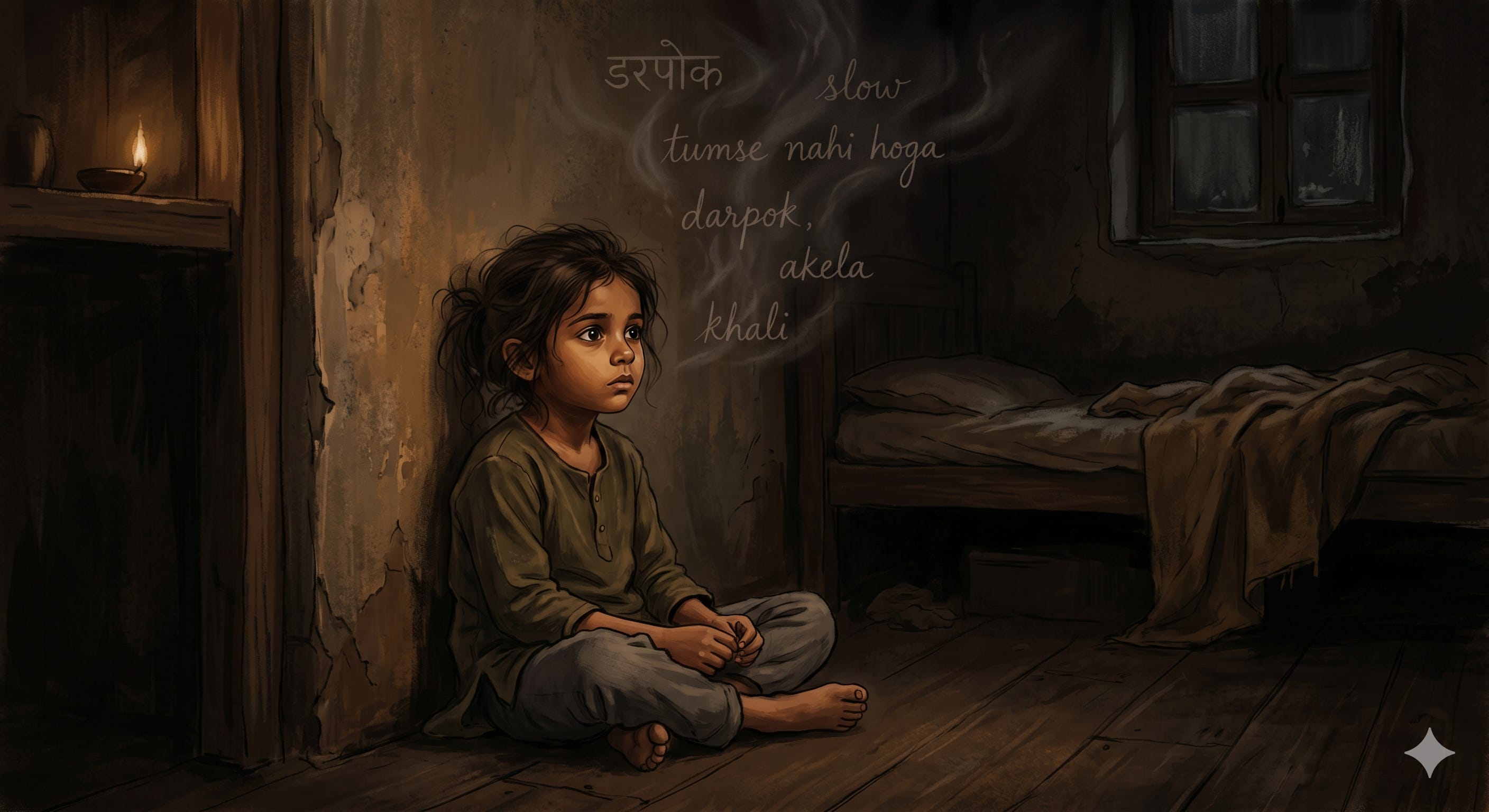
Because they were scared of the dark. Because they cried. Because they wouldn’t jump.
That same person today stares at a business decision, a risk worth taking, a leap that makes complete sense — and quietly steps back. Too risky. Not for me. Practical, they call it.
Was it practical?
Or was it still the dark?
Labels don’t expire. That’s what nobody tells you.
You say it once. Carelessly. In comparison — because the neighbour’s kid is faster, sharper, more confident. Your child hears it as a life sentence. Not because they’re fragile. But because you said it. You, the person who knows them best, who loves them most. If you say it, it must be true.
So they file it away. Quietly.
And spend the next few decades making decisions from that filing cabinet.
My mother once pointed to a newspaper cutting. A respected name. In jail. And said — no drama, no lecture:
“Ek chhat ho, kapde kam hon, bas do time ka khana ho — no problem. But beta, respect mat khona.”
I was ten. Barely listening.
I hear her every single time it matters.
That’s one voice she put in my head. Without a lesson plan. Without a parenting book. Just a moment that became a compass I didn’t know I had.
You are building that compass in your child. Right now. Today. Whether you mean to or not.
I know this because I slip too.
I chose an experiential school for my kids — deliberately, consciously, because I believe this world needs children who can think, not just perform. And still, when I see another child reading faster, answering everything, I catch myself. Looking at my own child. On the path I chose. Thinking: why are you so slow?
I know better.
I still said it.
Nobody gets this perfectly right. I don’t.
But here’s what I’ve realised — you cannot go back and edit your own childhood. Those voices are already in you, already running, already answering questions before you’ve finished asking them. Some of them are beautiful. Some of them have been quietly costing you for years.
What you can do is catch yourself before you speak to your child today.
Not be perfect. Just be conscious.
Because the label you throw out carelessly at dinner — tired, distracted, comparing — that’s not just a bad moment. That’s a recording. And your child will play it back at the worst possible time. In a boardroom. In a relationship. Standing at the edge of something that could change their life.
They’ll call it their gut feeling.
It’ll be you.
We all have gone though this at one point of our childhood ... thank you for sharing your thoughts